In constructionIn constructionIn constructionIn constructionIn constructionIn constructionIn constructionIn constructionIn constructionIn constructionIn constructionIn constructionIn constructionIn constructionIn construction

About

Matadouro — Centro Cultural do Porto

Introduction

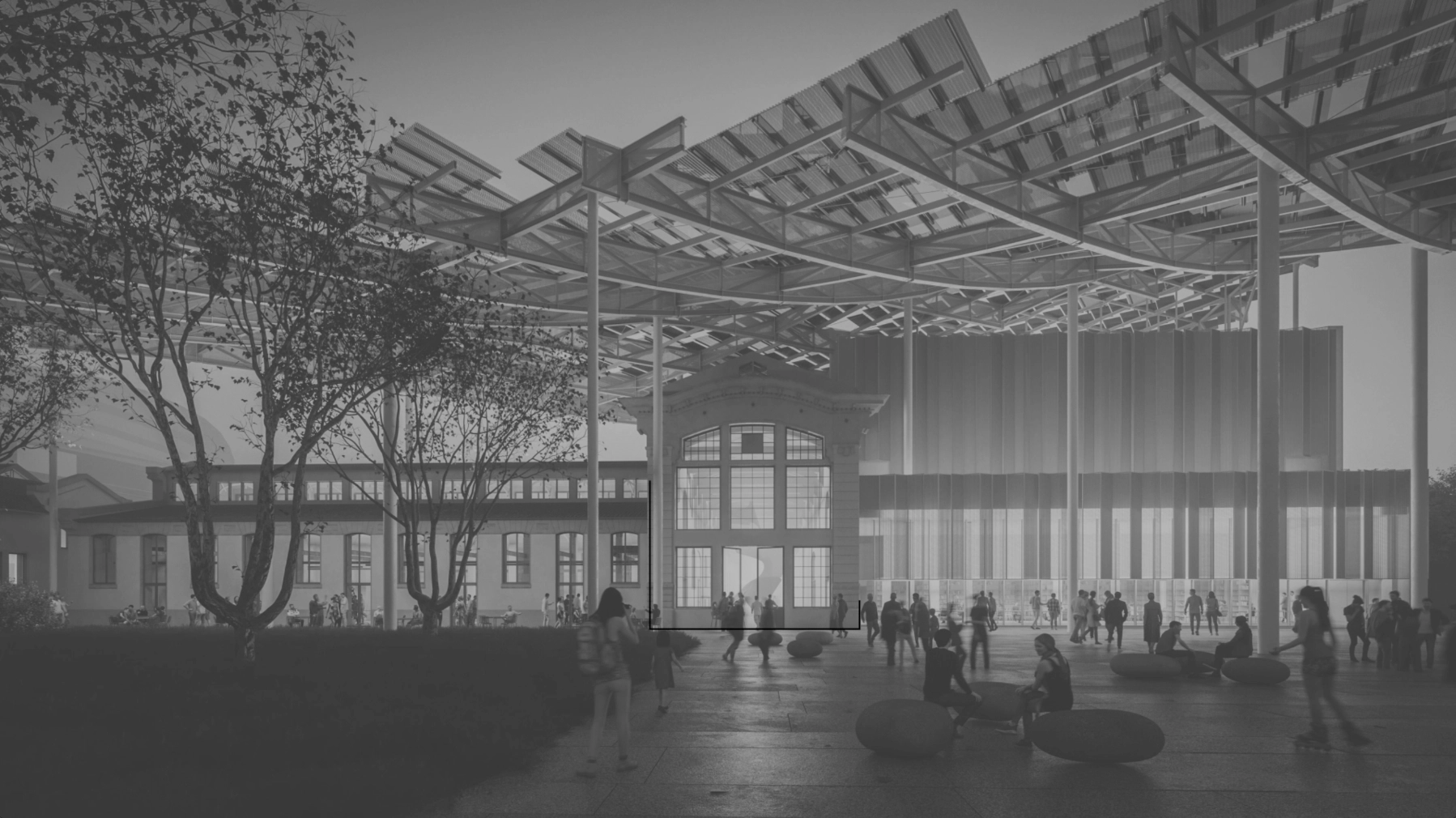
The Matadouro — Centro Cultural do Porto is a project that results from the requalification of the Old Industrial Slaughterhouse of Porto, transforming it into a new cultural centre connected to the city and the community. Standing out as one of the main buildings redeveloped by the Japanese architect Kengo Kuma in partnership with the Porto studio OODA, the Matadouro — Centro Cultural do Porto presents itself as a collaborative cultural ecosystem, built with and for people. Located in the eastern part of the city, it will be a collective space for meeting, sharing and building, which will develop a vast programme based on identity, heritage and creation, both indoors and outdoors, promoting intercultural and interdisciplinary dialogues at local, national and international level.

Branding

Matadouro — Centro Cultural do Porto

The visual identity of the Matadouro — Porto Cultural Centre reflects the uniqueness of the building through a system based on vertical and horizontal lines that evoke windows and doors - of various sizes and shapes - and the possibility of seeing, transposing and encountering various spaces and perspectives. These lines structure the entire graphic basis of the project, adapting to both the content and the future spaces.


Spatial Inventory

Cultural venues

Floor 1
Floor 0
  • Floor 1
    • 5
      Convergências Museum

      The Convergence Museum, as a cultural facility with museum functions, is part of the Municipality's strategic program for the promotion of cultural heritage and its recognition as an agent of cultural dynamism and a factor of social and community cohesion.

      In addition to other works from the municipal collection, the Museum will exhibit the Távora Sequeira Pinto Collection, which was transferred to the municipal sphere as part of a loan agreement. This private collection consists of cultural assets of very different origins and typologies—namely, sculpture, furniture, cartography, drawing, painting, textiles, jewelry and silverware, porcelain, and earthenware—focusing particularly on the Portuguese and European presence in Asia, and also encompassing other geographic regions, such as Africa and South America. It also highlights art from antiquity, late medieval European art, the Renaissance, Baroque, and the Romantic period.

      The Museum of Convergences is an art museum dedicated to the study and exhibition of cultural and artistic assets related to the processes of transculturality in art and connected art histories as a result of human mobility and the transfer of knowledge between cultures.


  • Floor 0
    • 1
      Central Nave

      The Central Nave is the emblematic space that marks the entrance to Matadouro – Porto Cultural Center. Monumental and functional, it connects the cultural center's various facilities and constitutes a new connection with the city's east side. More than a circulation hub, the Central Nave is a covered gallery open to artistic and cultural activities and programming, promoting enjoyment, encounters, and participation for all.

    • 2
      Community Educational Practices

      The Community Educational Practices Center at Matadouro — Porto Cultural Center will be a hub for shared learning, research, and dialogue between experiences and knowledge. With a bibliographic collection dedicated to art, museology, and the relationship between artistic and social practices, this center will function as a laboratory for formative experiences, fostering the exchange of knowledge between different generations and cultural contexts. Through workshops, conversations, and collaborative projects, the goal is to encourage critical and active participation from the public, reinforcing Matadouro's role as a center for inclusion, citizenship, and social and cultural development.

    • 3
      Documentation Center of the Museum of Convergences

      The Documentation Center of the Museu das Convergências will focus on the preservation, study, and dissemination of knowledge in the areas of art, culture, and heritage. As an information space—both physical and digital—it will be dedicated to the study of decorative arts, contemporary art, history and art history, sociology and anthropology, urban planning and architecture, and other topics relevant to the study of the site and the collections it preserves and presents. Its objectives are to support researchers, artists, students, and the community, as well as to promote mediation activities that contribute to the enrichment of research, creation, and cultural dialogue.

    • 4
      Porto Municipal Gallery

      The Porto Municipal Gallery embraces contemporary practices in sculpture, photography, moving image, installation, pedagogy, performance, painting, thought, research, and sound to explore the arts and culture of the 21st century. The GMP program addresses pressing issues that define the present and the near future, aiming to engage a diverse set of specialized and generalist audiences. Since relaunching its institutional mission in 2014, the Porto Municipal Gallery has collaborated with local, national, and international partners.

    • 5
      Convergências Museum

      The Convergence Museum, as a cultural facility with museum functions, is part of the Municipality's strategic program for the promotion of cultural heritage and its recognition as an agent of cultural dynamism and a factor of social and community cohesion.

      In addition to other works from the municipal collection, the Museum will exhibit the Távora Sequeira Pinto Collection, which was transferred to the municipal sphere as part of a loan agreement. This private collection consists of cultural assets of very different origins and typologies—namely, sculpture, furniture, cartography, drawing, painting, textiles, jewelry and silverware, porcelain, and earthenware—focusing particularly on the Portuguese and European presence in Asia, and also encompassing other geographic regions, such as Africa and South America. It also highlights art from antiquity, late medieval European art, the Renaissance, Baroque, and the Romantic period.

      The Museum of Convergences is an art museum dedicated to the study and exhibition of cultural and artistic assets related to the processes of transculturality in art and connected art histories as a result of human mobility and the transfer of knowledge between cultures.

    • 6
      Community Artistic Practices

      A space for collective creation and artistic experimentation, open to all those interested in exploring art as a means of expression and transformation. With a multidisciplinary approach, it will host projects that intersect visual, performative, sonic, and literary languages, encouraging the direct involvement of artists, collectives, and communities, both professional and non-professional. It will be a space for collaboration, committed to the plurality of voices and the construction of shared meanings, both inside and outside the cultural center.

    • 7
      Artistic Workshops

      These spaces are spaces for artistic work and experimentation, designed to support creators at different stages of research, development, and production. Designed to accommodate diverse practices—from visual arts to performance, including writing, sound, and new media—they will provide the conditions for the creation of original and collaborative projects, fostering the exchange of experiences between artists and the community, stimulating collaborative networks, and the circulation of ideas within the city and region's cultural landscape.


Team

  • Direção de Convergências

    Direction
    Rui Silvestre

    Executive Direction
    João Covita

    Technical Coordination
    Francisco Teles

    Educational Projects Management
    Marta Bernardes

    Executive Production
    • Ana Amorim
    • Celeste Domingues
    • José Ralha

    Communication
    Ricardo Alves
  • Museum of Convergences

    Direction
    Rui Oliveira Lopes

    Museology
    Sofia Mendes

    Conservation and Restoration
    Bárbara Campos Maia
  • Gabinete de Arte e Coesão

    Production Management
    Tiago Espírito Santo

    Executive Production
    Margarida Andresen

    Technical Management
    Carin Geada
  • Design

    Graphic Design
    Atelier D’Alves

    Web design and development
    PLANA
  • Porto City Council

    President
    Pedro Duarte

    Councilor for Culture
    Jorge Sobrado
  • Ágora — Cultura e Desporto do Porto, E.M.

    Chairman of the Board of Directors
    Rodrigo Passos

    Vice-president of the Board of Directors
    César Vasconcellos Navio

    Executive Member of the Board of Directors
    Joana Meneses Fernandes

    Administration Secretariat
    Cátia Silva, Liliana Santos

    Legal Services and Contracting Department
    Sérgio Caldas

    Human Resources, Organization and Information Systems Management Department
    Sónia Cerqueira

    Financial Direction
    Alexandra Espírito Santo

    DPO
    Filipa Faria

    Communication and Image Direction
    Bruno Malveira

    Direção de Manutenção
    • João Bastos (Coordinator)
    • Miguel Ivo (Coordinator)
In constructionIn constructionIn constructionIn constructionIn constructionIn constructionIn constructionIn constructionIn constructionIn constructionIn constructionIn constructionIn constructionIn constructionIn construction